 ultimate-guide
Bathroom Remodel Cost Breakdown 2026
Table of Contents
- What Drives Your Bathroom Remodel Cost in 2026
- Budget, Mid-Range, and Luxury Remodel Tiers Compared
- Bathroom Renovation Labor vs Material Costs
- Hidden Costs and Contingency Budget Planning
- Bathroom Remodel Timeline 2026: What to Expect
- How to Save Money on Bathroom Remodeling Without Cutting Corners
- Hiring a General Contractor for Bathroom Renovation
- Conclusion
Last Updated: August 20, 2026
Planning a bathroom renovation without a clear cost picture is one of the most reliable ways to end up over budget, behind schedule, and frustrated with your contractor. The bathroom remodel cost breakdown for 2026 looks different from prior years: material prices have shifted, labor markets remain tight in many regions, and supply chain timelines for specialty fixtures have extended. This guide from Superior Painting and Remodeling LLC walks you through every major cost driver so you can plan realistically and avoid the surprises that derail most renovation projects.
What Drives Your Bathroom Remodel Cost in 2026
The bathroom remodel cost breakdown starts with two questions: how much are you changing, and how complex is the work?
Project Scope and Square Footage
Square footage matters, but it's not the whole story. A small primary bathroom with a full gut renovation often costs more per square foot than a larger guest bathroom with a simple refresh because plumbing, waterproofing, and tile work are priced by job complexity, not just area. A bathroom renovation cost estimate should account for room size (most residential bathrooms run 40-100 square feet), fixture count (a full bath with tub, separate shower, double vanity, and toilet costs significantly more than a half bath), and layout changes (moving plumbing lines or relocating the toilet requires licensed plumbing work and permitting).
Structural Changes, Permitting Fees, and Building Codes
Structural changes are the single biggest cost multiplier. Moving a load-bearing wall, adding a window, or relocating plumbing stacks requires permits, inspections, and licensed subcontractors. Skipping permits to save money creates long-term consequences: unpermitted work can complicate home sales, void homeowner's insurance claims, and require costly remediation later. Building codes govern waterproofing requirements, ventilation (exhaust fan placement and CFM ratings), and electrical work near water sources. These aren't optional, they're the floor beneath every other decision you make.
Budget, Mid-Range, and Luxury Remodel Tiers Compared
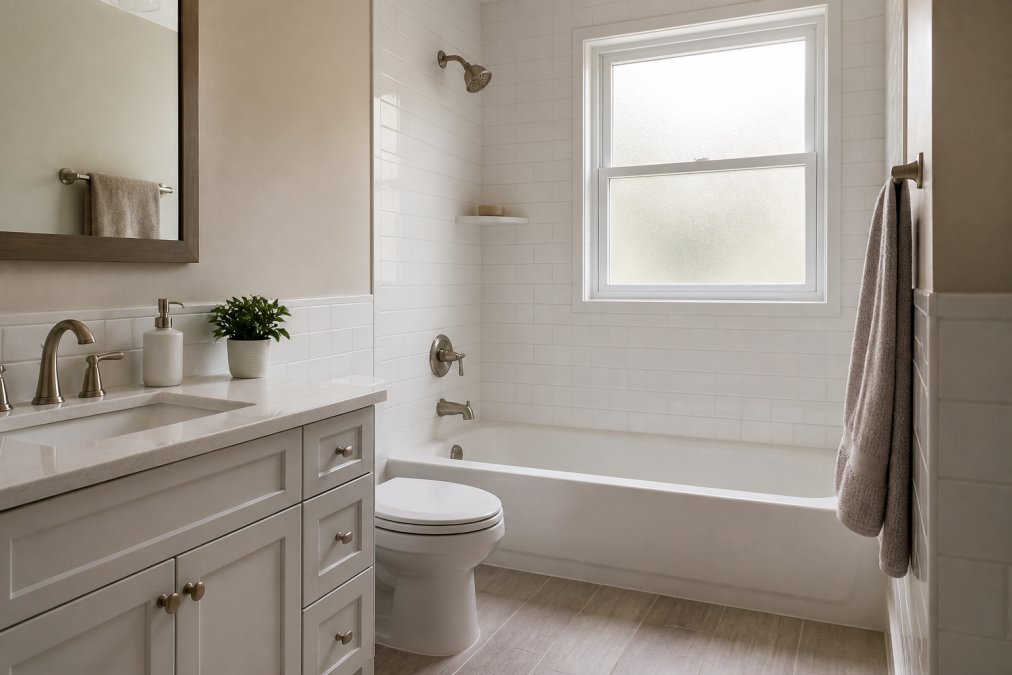
Understanding the three main remodel tiers helps you set realistic expectations before talking to contractors. The ranges below reflect general market conditions in 2026.
| Remodel Tier | Typical Scope | Key Characteristics | Best For |
|---|---|---|---|
| Basic Refresh | Fixture replacement, paint, accessories | Cosmetic only, no layout changes | Dated but functional bathrooms |
| Mid-Range | New tile, vanity, plumbing fixtures, lighting | Some layout adjustment, quality materials | Primary bathrooms needing full update |
| High-End / Luxury | Custom cabinetry, premium tile, full gut | Custom everything, structural changes possible | Master suites, high-value homes |
Basic Refresh: Fixture Replacement and Cosmetic Updates
A basic refresh targets elements that age fastest: toilet, faucet, vanity light, mirror, and accessories. This tier stays entirely cosmetic with no tile removal, plumbing relocation, or electrical upgrades beyond fixture swaps. A skilled crew completes a basic refresh in two to four days with minimal disruption.
Mid-Range Remodel: New Layout and Quality Materials
The mid-range remodel is where most homeowners land. It replaces flooring materials, installs new tile in the shower or tub surround, upgrades the vanity installation, and often includes new plumbing fixtures throughout. Material expenses rise significantly because quality tile, solid-surface countertops, and semi-custom vanity cabinetry cost more than builder-grade alternatives. Some tile lines and vanity styles carry six-to-twelve week lead times in 2026, which pushes your start date and cascades into scheduling conflicts.
High-End Renovation: Custom Cabinetry, Tile Work, and Premium Fixtures
High-end renovation means custom everything: custom cabinetry built to exact dimensions, large-format tile requiring precision installation, frameless glass shower enclosures, and premium plumbing fixtures. The cost jump from mid-range to high-end is not linear, with premium materials carrying significant markups.
Bathroom Renovation Labor vs Material Costs
Labor and materials typically split somewhere in the range of 40-60% labor to 40-60% materials on a full bathroom renovation, though this ratio shifts depending on work complexity.
DIY vs. Professional Labor: Where the Real Savings Are
DIY bathroom work can reduce labor costs, but savings are not uniform across every task.
Tasks where DIY is practical:
- Painting walls and ceilings after tile and fixtures are installed
- Installing accessories (towel bars, toilet paper holders, mirrors)
- Caulking around a tub or shower after professional tile work
- Demolition of non-structural elements
Tasks that require licensed professionals:
- Plumbing rough-in and fixture connections
- Electrical work beyond simple fixture swaps
- Waterproofing behind shower tile
- Any work requiring a permit and inspection
The hidden cost of DIY errors in a bathroom is disproportionately high. A failed waterproofing job can cause structural damage that costs far more to remediate than the original professional installation. According to the Environmental Protection Agency's guidance on mold prevention in homes, moisture intrusion behind bathroom walls is one of the primary causes of household mold growth, which requires professional remediation.
Hidden Costs and Contingency Budget Planning
A contingency budget is not optional, it is the most important line item in any bathroom renovation plan. Hidden costs appear in almost every bathroom renovation once walls are opened: subfloor damage from water intrusion, outdated plumbing requiring replacement to meet building codes, electrical deficiencies (missing GFCI outlets, inadequate circuits), and hazardous materials like asbestos or lead paint in homes built before 1980. A standard contingency budget recommendation is 10-20% of your total project budget. For older homes or bathrooms untouched for decades, lean toward the higher end.
Bathroom Remodel Timeline 2026: What to Expect
A bathroom remodel timeline depends heavily on project scope, material availability, and contractor scheduling. Most homeowners should plan for:
- Design and material selection: 2-4 weeks
- Permitting: 1-4 weeks
- Demolition: 1-2 days
- Rough-in work (plumbing, electrical): 2-5 days
- Waterproofing and backer installation: 1-2 days, plus cure time
- Tile work: 3-7 days
- Vanity installation, fixture installation, finishing: 2-4 days
- Final inspection and punch list: 1-3 days
Total elapsed time for a mid-range bathroom remodel typically runs four to eight weeks from contract signing to completion.
Supply Chain and Material Lead Times in 2026
Supply chain conditions in 2026 have stabilized compared to earlier disruptions, but lead times for specialty items remain longer than pre-2020 norms. According to the Associated General Contractors of America on construction material lead times, contractors are still seeing extended lead times on imported tile, specialty plumbing fixtures, and custom vanity orders. Order tile, vanities, and specialty fixtures before your project start date, not after. Confirm lead times with your supplier in writing at the time of order and have a backup material option selected for each specialty item in case your first choice is unavailable.
How to Save Money on Bathroom Remodeling Without Cutting Corners
Saving money on bathroom remodeling is about making smarter decisions, not cheaper ones.
Effective cost-reduction strategies:
- Keep the existing layout. Moving plumbing lines is one of the most expensive things you can do. If the toilet, vanity, and shower can stay in place, your plumbing costs drop substantially.
- Choose stock vanities over custom. Semi-custom and stock vanity lines offer excellent build quality at a fraction of custom cabinet pricing.
- Limit large-format tile to accent areas. Using it selectively on a feature wall while using standard-format tile elsewhere delivers visual impact at lower cost.
- Get three detailed quotes. Not ballpark estimates, detailed, line-item quotes that break out labor costs, material expenses, and allowances separately.
- Do your own demolition (carefully). With proper planning and your contractor's approval, homeowner-performed demolition can reduce labor costs without introducing skilled-trade risk.
Eco-Friendly and Sustainable Upgrades That Pay Off
Sustainable upgrades in a bathroom renovation pay back through reduced utility costs over time. High-efficiency toilets (1.28 gallons per flush or less) use significantly less water than older models. Low-flow showerheads and aerator-equipped faucets reduce water consumption without sacrificing pressure. LED lighting consumes a fraction of the energy of older fixtures. Proper ventilation upgrades with high-CFM exhaust fans and humidity sensors prevent moisture damage that would otherwise require costly future repairs.
Financing and Payment Structure Options
Most homeowners fund bathroom renovations through several financing structures: home equity loans (fixed-rate, predictable payments), home equity lines of credit (flexible but variable rates), personal loans (unsecured but higher rates), contractor financing (convenient but compare rates carefully), or cash payment (eliminates interest and sometimes provides negotiating leverage). Never pay more than 10-15% of the total project cost as a deposit before work begins. Milestone-based payment schedules tied to completion of specific project phases protect you if the project stalls.
Hiring a General Contractor for Bathroom Renovation
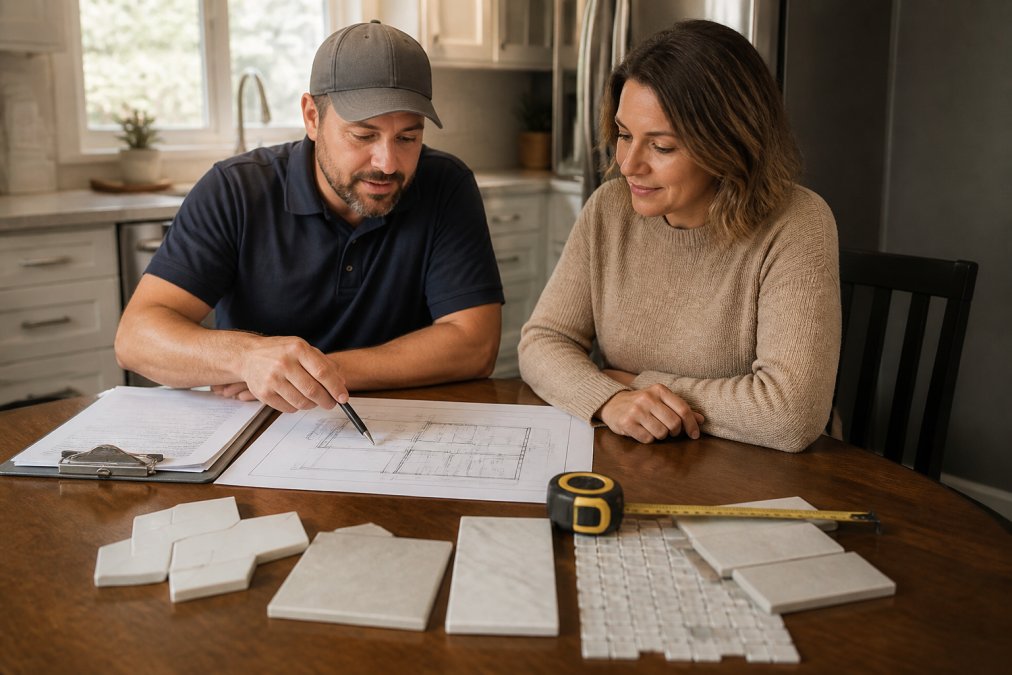
Hiring a general contractor for bathroom renovation is the right move for any project involving multiple trades, permitting, or structural changes. A general contractor coordinates the plumber, electrician, tile setter, and other subcontractors so you don't manage six different schedules simultaneously.
What to verify before signing any contract:
- License and insurance: Verify the contractor holds a current state contractor's license and carries both general liability and workers' compensation insurance.
- References from similar projects: Ask specifically for bathroom renovation references.
- Detailed written contract: The contract should specify scope of work, materials by brand and model number, payment schedule, timeline, and change order procedures.
- Change order process: Understand exactly how changes are priced and approved before work begins.
Superior Painting and Remodeling LLC holds an A+ BBB rating and offers free project assessments, providing a detailed, honest evaluation of your bathroom project before committing to anything. The team's approach is straightforward: no pressure, no inflated scopes, and transparent communication throughout the project.
Contractor Vetting Checklist:
- State contractor license verified (current and active)
- General liability insurance certificate received
- Workers' compensation insurance certificate received
- BBB accreditation or equivalent verified
- Three references from bathroom-specific projects obtained and called
- Detailed written quote with line-item breakdown received
- Contract includes scope, timeline, payment schedule, and change order terms
- Material specifications listed by brand and model number
- Permit responsibility clearly assigned in contract
ROI and Resale Value: Does a Bathroom Remodel Pay Back?
A bathroom remodel cost breakdown should always include an honest look at return on investment, especially if resale is part of your calculus. Mid-range bathroom remodels tend to offer better ROI than high-end renovations in most markets because luxury finishes appeal to a narrower buyer pool. According to the Remodeling Magazine Cost vs. Value Report, bathroom renovations consistently rank among the top home improvement projects for cost recoupment at resale. The strongest ROI scenarios share a common profile: the bathroom was clearly dated or dysfunctional before the renovation, the upgrade brings it in line with comparable homes in the neighborhood, and the materials chosen are durable and broadly appealing rather than highly personalized.
Bathroom renovation planning is genuinely complex, and the cost variables are significant enough that a generic estimate rarely reflects what your specific project will actually cost. Superior Painting and Remodeling LLC provides free project assessments that walk you through a realistic, line-item cost picture for your bathroom before you commit to anything. With an A+ BBB rating, expert craftsmanship in bathroom remodeling, and a straightforward approach to change orders and project timelines, the team is built for homeowners who want honest answers, not sales pressure. Call for your estimate and get a clear picture of what your bathroom remodel actually costs in 2026.
Frequently Asked Questions
How much should a bathroom remodel cost in 2026?
The total cost depends on project scope, square footage, material choices, and local labor rates. A basic fixture replacement sits at the low end, a mid-range remodel with new tile work and vanity installation lands in the middle, and a full high-end renovation with custom cabinetry and structural changes sits at the top. Get itemized quotes from licensed contractors to build an accurate budget for your specific bathroom layout and goals.
What is the biggest expense in a bathroom remodel?
Labor costs typically make up the largest share of a bathroom renovation budget, often accounting for 40-60% of the total project cost. Plumbing fixtures and tile work are the next biggest material expenses. If your remodel involves moving plumbing lines, adding electrical upgrades, or waterproofing a shower enclosure, those subcontractor fees add up quickly. Keeping the existing bathroom layout intact is one of the most effective ways to control costs.
What is the 30% rule in remodeling?
The 30% rule is a general guideline suggesting you should not spend more than 30% of your home's current market value on a single renovation. For bathroom remodels specifically, it helps prevent over-improving relative to neighborhood home values. Before finalizing your project scope, factor in your home's resale value and the realistic return on investment a bathroom renovation typically delivers in your local market.
Is $10,000 enough for a bathroom remodel?
Ten thousand dollars can cover a solid mid-range refresh, think new flooring materials, a vanity replacement, updated plumbing fixtures, and fresh tile work, if the bathroom layout stays the same and no structural changes are needed. It is unlikely to cover a full gut renovation or high-end finishes. Getting a detailed cost estimation from a licensed contractor before committing to a budget is the safest way to set realistic expectations.
What hidden costs should I anticipate during a bathroom remodel?
Common hidden costs include water damage found behind walls during demolition, outdated wiring that requires electrical upgrades to meet current building codes, permitting fees, and subcontractor scheduling delays. A contingency budget of 10-20% of your total project cost is standard practice. Supply chain lead times in 2026 can also extend your renovation timeline, which may add to labor costs if crews need to return after materials arrive.
How do labor costs impact total bathroom renovation expenses in 2026?
Labor costs for a bathroom renovation cover general contractor fees, plumbers, tile setters, electricians, and painters. Each trade bills separately, and coordinating subcontractors adds to project management time. In 2026, skilled trade labor remains in high demand, so rates have stayed firm. Hiring a single general contractor to manage the full scope, rather than booking each trade yourself, often reduces scheduling gaps and keeps the overall renovation timeline on track.
This article was written using GrandRanker