 how-to
Preventing Dust During Home Renovation: A Step-by-Step Guide
Table of Contents
- Why Dust Control Matters During Renovation
- How to Seal Off a Room for Construction
- How to Protect HVAC Systems During Renovation
- Setting Up Air Filtration and Extraction
- Personal Protective Equipment for Workers
- Cleaning Fine Drywall Dust After Remodel
- Common Dust Control Mistakes to Avoid
- Conclusion
Last Updated: August 29, 2026
Why Dust Control Matters During Renovation
Dust during home renovation is a serious health and safety concern that extends far beyond the work site. Fine dust particles, including silica dust from drywall and concrete, travel through your HVAC system, settle on every surface, and pose genuine respiratory risks to occupants and workers alike.
Proper dust control protects your health, preserves air quality, and significantly reduces post-project cleanup burden.
Preventing dust requires a multi-layered approach: seal off work areas, protect your HVAC system, extract dust at the source, and clean strategically as you go. When these systems work together, they transform the renovation experience from chaotic to controlled.
How to Seal Off a Room for Construction
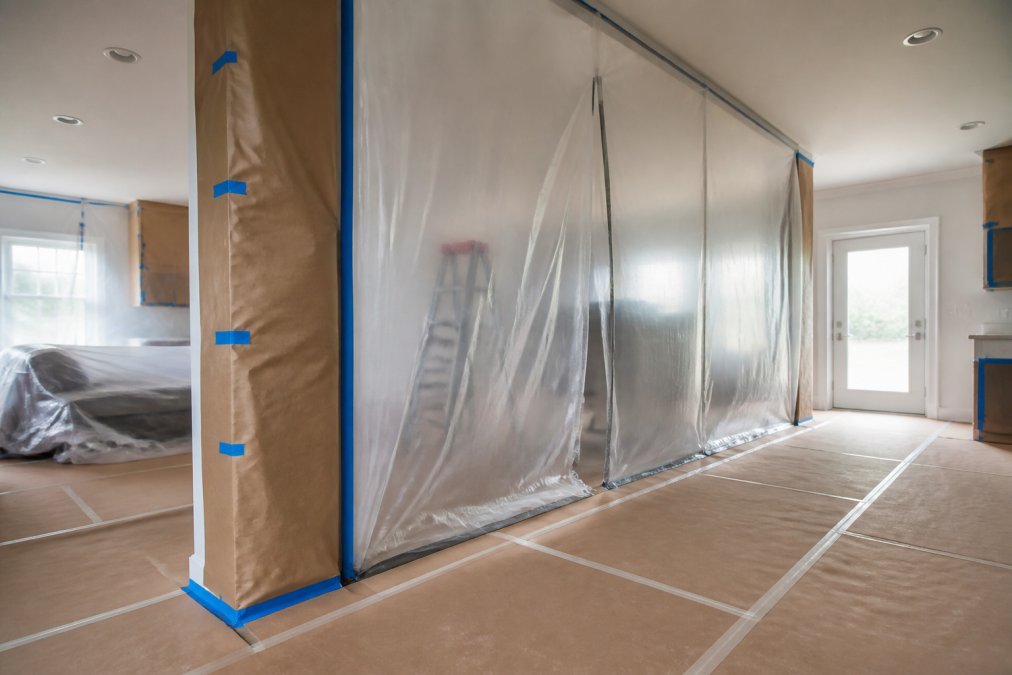
Sealing off a room creates a physical barrier that prevents dust from migrating into the rest of your home. This requires more than closing a door, you need containment barriers that actually work.
Using Plastic Sheeting and Zip Walls
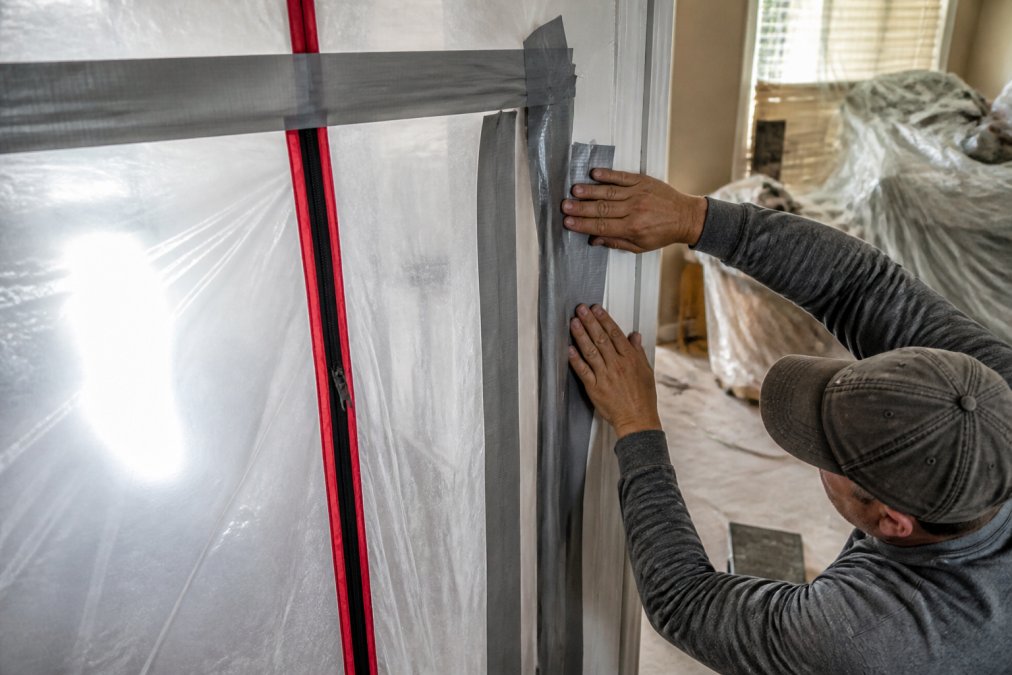
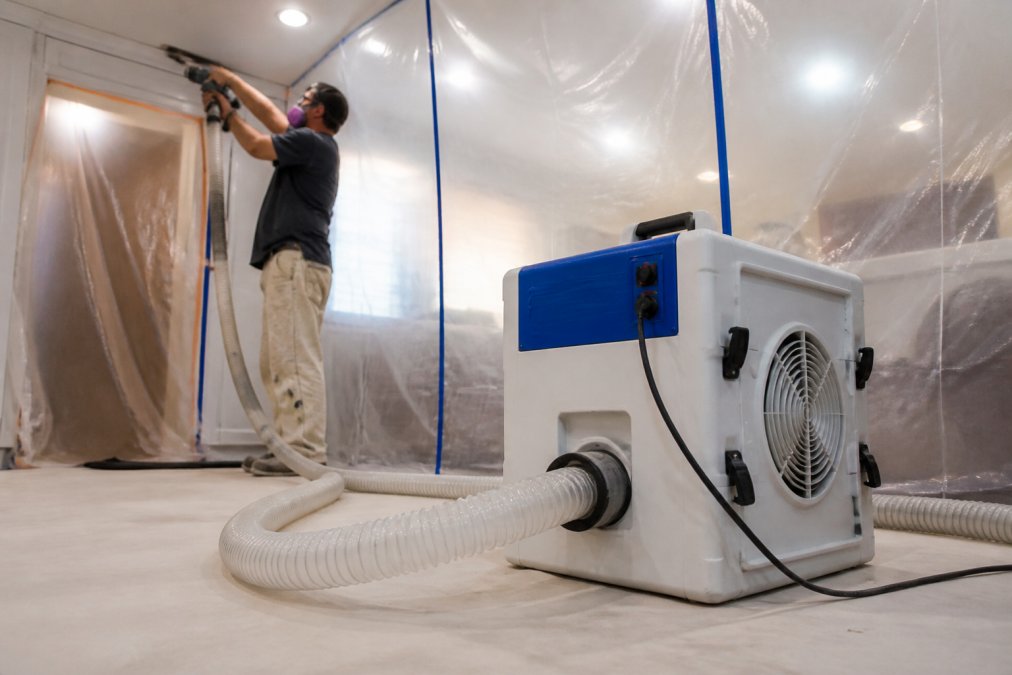
Standard 6-mil polyethylene sheeting provides an effective dust barrier. The key is installation: gaps and loose seams are where dust escapes. Cover doorways completely, running plastic from floor to ceiling with seams overlapped by at least 6 inches and secured with duct tape. Seal every edge, including corners, frame tops, and floor contact points.
Zip walls (temporary wall containment systems) are a significant upgrade. These use a track system and zipper-sealed plastic barriers to create an airtight seal around doorways. Workers and materials can move through the zippered opening while maintaining the barrier, creating a negative pressure-friendly containment zone that prevents dust from escaping into adjacent areas.
Sealing HVAC Vents and Return Ducts
Your HVAC system is a dust distribution network if unprotected. Dust-laden air gets pulled into return vents, circulated through ductwork, and deposited throughout your home. Locate all return air vents and supply registers in the renovation area and seal them with plastic sheeting and duct tape, or use purpose-built vent covers. The seal must be complete, even small gaps allow negative air pressure to pull dust into the ductwork.
How to Protect HVAC Systems During Renovation
Shut down your HVAC system during the heaviest dust-generating phases: demolition, drywall removal, and concrete cutting. These create massive volumes of airborne particulates that your system will distribute throughout your home. When the HVAC is off, you've also eliminated the negative pressure that pulls dust through gaps and cracks, making containment barriers far more effective.
Between active dust-generating work, keep the system running with sealed return vents in the work zone. This maintains air circulation in unaffected areas without pulling contaminated air into the system. Replace your HVAC filter more frequently during renovation, dust accumulation clogs filters faster than normal, reducing efficiency.
Setting Up Air Filtration and Extraction
Once you've contained the space and protected your HVAC, you need active dust extraction to capture dust at the source and remove it from the work zone air.
HEPA Filtration and Air Scrubbers
HEPA (High-Efficiency Particulate Air) filtration captures particles as small as 0.3 microns with 99.97% efficiency (the EPA). HEPA air scrubbers are portable units that pull contaminated air through a multi-stage filtration system and return clean air to the work zone. Position units strategically, one typically covers 300-400 square feet. For larger projects, use multiple units positioned to create air circulation patterns that pull dust toward the scrubber.
HEPA filtration works best with negative air pressure, where the scrubber removes air faster than dust can enter, creating a slight vacuum that pulls contaminated air toward the filtration unit. Run air scrubbers continuously during and for several hours after dust-generating work to ensure all airborne particulates are captured.
Tool-Specific Dust Extraction
Individual power tools generate enormous volumes of dust if not properly controlled. Connect a HEPA-rated vacuum directly to the tool's collection port to capture 80-90% of dust at the source. For tools without built-in collection ports, use a dust shroud or capture hood. Wet cutting (using water to suppress dust) is another effective method for tools like circular saws and angle grinders.
Personal Protective Equipment for Workers
Workers need personal protection even with containment and extraction systems in place. N95 masks filter 95% of airborne particles 0.3 microns and larger, appropriate for general dust exposure during demolition and drywall work (the CDC). For silica dust (from concrete cutting), N100 masks or powered air-purifying respirators (PAPRs) provide better protection (osha.gov). Silica dust is particularly hazardous, prolonged exposure causes silicosis, a serious lung disease.
Fit matters. A mask only works if it seals properly against the face. Workers should be fit-tested for their specific mask model. Beyond masks, workers should wear protective clothing that covers skin and can be easily removed. Many contractors use disposable coveralls that are removed before leaving the work zone. Safety glasses or goggles rated for dust protection should be worn throughout the project.
Cleaning Fine Drywall Dust After Remodel
Drywall dust is notoriously persistent. Its fine particles settle on every surface and re-suspend when disturbed. The key to effective cleanup is using the right techniques.
Wet Cleaning Techniques
Dry sweeping and vacuuming alone won't remove fine drywall dust effectively. Dry cleaning methods agitate dust and send it back into the air. Wet cleaning techniques prevent this by binding dust particles so they can be removed without re-suspension.
Start with damp mopping rather than dry sweeping. Use a microfiber mop slightly dampened with water, moist enough to attract and hold dust particles. Microfiber is superior to cotton mops because it electrostatically attracts fine dust rather than pushing it around.
For surfaces that can't be mopped, use damp cloths or microfiber dusting cloths. For heavier dust accumulation, use a HEPA vacuum with a damp filter or a wet-dry vacuum. Standard household vacuums without HEPA filtration actually spread fine dust. Plan for multiple cleaning passes over several days to ensure complete removal.
Protecting Pets and Occupants During Cleanup
Pets are particularly vulnerable to dust exposure. Keep them in a separate, sealed area away from the work zone. If pets must be in the home during renovation, keep them in areas farthest from the work zone and provide clean water frequently.
For occupants, minimize time in the work zone and adjacent areas where dust has migrated. Seal bedroom doors if bedrooms are not part of the renovation. Children are more susceptible to dust-related respiratory issues than adults, keep them out of the renovation area entirely. If family members have asthma or other respiratory conditions, extra precautions are warranted.
Common Dust Control Mistakes to Avoid
The most common mistake is underestimating how far dust travels. Airborne particulates migrate through your home's air circulation, settle on surfaces throughout the house, and persist for weeks. Proper containment requires sealing every opening and managing air pressure.
Another frequent error is using inadequate barriers. Single-layer plastic sheeting with loose seams is barely better than no barrier. Invest in proper containment materials and thorough sealing, your cleanup burden drops dramatically.
Many contractors skip protecting the HVAC system entirely. Dust in your ductwork circulates for months after the project ends and can damage equipment. Taking 30 minutes to seal vents and returns saves weeks of cleanup and potential HVAC repairs.
Relying solely on air scrubbers without source extraction is inefficient. Combine air scrubbers with tool-specific extraction and containment for maximum effectiveness. Starting cleanup too early is another pitfall, wait until active work is complete and dust has settled (24-48 hours) before beginning. Finally, neglect post-project HVAC maintenance is costly. Replace your HVAC filter immediately after renovation and again 2-3 weeks later.
Dust control during home renovation requires planning, the right equipment, and systematic execution. When you're investing in a major remodel, taking time to prevent dust protects your health, preserves your home's air quality, and dramatically reduces cleanup time after the project ends.
If you're planning a kitchen, bathroom, or whole-home renovation, dust control should be part of your project scope from day one. Superior Painting and Remodeling LLC incorporates dust mitigation into every renovation project we undertake, from sealing containment barriers to coordinating HVAC shutdown and post-project cleaning. Our approach ensures that your home stays livable during renovation and that cleanup is manageable when work is complete. Call for your estimate and ask about our dust control protocols. We'll walk you through exactly how we keep your home protected throughout the project.
Frequently Asked Questions
Q: What's the most effective way to contain construction dust when preventing dust during home renovation?
A: Combine multiple containment methods: seal off the work area with plastic sheeting and zip walls, use negative air pressure systems with HEPA filtration, seal HVAC return vents and ducts, and maintain damp conditions to suppress airborne particulates. Professional-grade air scrubbers rated for the room size are essential. This multi-layered approach prevents dust migration to other areas of your home and protects HVAC systems from contamination.
Q: How do I protect my furniture and belongings from renovation dust?
A: Use heavy plastic sheeting or protective film to cover furniture, appliances, and fixtures before work begins. For items you can't move, seal them in plastic and tape all seams. Close doors to other rooms and apply weatherstripping to gaps. Dust barriers and containment walls keep fine dust and demolition debris confined to the work zone. Damp mopping the work area daily also reduces the amount of dust that escapes into adjacent spaces.
Q: How long does it take for dust to settle after renovation?
A: Fine drywall dust and airborne contaminants can remain suspended for 24-48 hours after work stops, even with ventilation. Silica dust and other hazardous particles settle more slowly. Using HEPA filtration and air scrubbers during and after work significantly speeds cleanup. Wet cleaning techniques are more effective than dry vacuuming for removing settled fine dust from surfaces and reducing re-suspension of particles into the air.
Q: Should I use an air purifier during home remodeling?
A: Yes. Portable HEPA air scrubbers are more effective than standard air purifiers for construction dust. They handle the volume of airborne particulates, demolition debris, and fine dust generated during renovation. Position the unit in the containment zone with ducting directed outside if possible. Run it continuously during work and for several hours after completion. This protects both air quality and your HVAC system from cross-contamination by construction dust.
This article was written using GrandRanker