 comparison
Professional Painting vs DIY Painting: Which Wins in 2026?
Table of Contents
- Professional Painting vs DIY Painting: The Quick Comparison
- The Cost of Professional Interior Painting vs Doing It Yourself
- How Long Does It Take to Paint a Room? DIY Timelines vs Pro Crews
- The Painting Supplies Checklist for Homeowners Going the DIY Route
- Common DIY Painting Mistakes That Show Up in the Finish
- Where DIY Wins and Where Professional Painting Wins
- Resale Value, Warranty, and Waste: What Most Comparisons Skip
- Frequently Asked Questions
Last Updated: September 15, 2026
Professional Painting vs DIY Painting: The Quick Comparison
The professional painting vs DIY painting decision comes down to three variables: your time, your tolerance for imperfection, and how long you plan to stay in the home. Homeowners often underestimate prep work, overestimate their available weekends, and end up calling a pro anyway, usually after the paint is already bought.
Here's the honest breakdown most comparison articles skip: the real cost gap isn't labor versus materials. It's what happens when a DIY job fails and has to be redone.
Professional painting is a service where trained crews handle surface preparation, primer application, and finish coats using commercial equipment and carry liability coverage for the work. DIY painting is a homeowner-managed project where you supply the labor, tools, and time, trading cost savings for control and risk.
Winner: Professional painting for ceilings, trim work, exterior surfaces, and any room you'll show to buyers. Choose DIY for a single accent wall, a rental you don't own long-term, or a utility space where finish quality barely matters.
| Factor | Professional Painting | DIY Painting |
|---|---|---|
| Upfront cost | Higher (labor + materials) | Lower (materials only) |
| Time investment | Days, handled by crew | Multiple weekends |
| Finish quality | Consistent, no roller marks | Varies with skill |
| Surface prep | Sanding, patching, caulking included | Your responsibility |
| Warranty | Typically covered | None |
| Best for | Trim, ceilings, exteriors | Accent walls, rentals |
The Cost of Professional Interior Painting vs Doing It Yourself
The cost of professional interior painting is driven by labor, not paint. That single fact explains most of the gap homeowners see between a quote and a store receipt. Materials for a standard room often land in the low hundreds, while the labor to prep, cut in, and finish that same room is where the real money goes.
Where the Money Actually Goes
A professional quote bundles several line items that a DIY budget usually ignores:
- Surface preparation labor, sanding, patching nail holes, caulking gaps, and deglossing glossy surfaces
- Masking and protection, taping trim, covering floors and furniture, removing and reinstalling outlet covers
- Primer application, often a separate coat, not folded into the finish coats
- Two finish coats, standard for any color change or sheen change
- Cut-in time, the slow, brush-only work around ceilings, trim, and corners
- Cleanup and haul-away, drop cloths, tape removal, and paint disposal
A DIY budget typically covers paint, a roller, a brush, tape, and a drop cloth. When homeowners compare a quote to a store receipt, they are comparing a full service to a partial one. The U.S. EPA's guidance on lead-safe renovation matters here too: homes built before 1978 require certified handling during prep, which most DIYers are not equipped for, and that certification adds cost to any professional quote on an older home.
The Hidden Labor of Prep Work
Prep is 60 to 70 percent of a quality paint job, and it is invisible in the final photos (Managing Your Crew). Sanding, patching, caulking gaps, and taping trim can take longer than the painting itself. This is the work DIYers skip, and it is the reason DIY finishes show every imperfection months later.
A useful way to think about it: for every hour spent rolling paint on a wall, expect one to two hours of prep and one hour of cleanup and dry-time management. A homeowner who budgets a single weekend for a bedroom is usually budgeting for the painting only, not the job.
The Rework Cost Nobody Budgets For
The real cost gap is not labor versus materials. It is what happens when a DIY job fails and has to be redone. A failed finish means buying paint a second time, renting or rebuying supplies, and either losing another set of weekends or paying a professional to correct the work, which often costs more than the original quote because the failed coating has to be sanded back first.
The break-even point between DIY and professional work often sits at small, low-stakes surfaces. Once a project involves ceilings, trim, exteriors, or any surface a buyer will inspect, the expected cost of rework usually closes the gap.
What DIY Actually Saves
DIY saves the labor line, not the material line. Paint, primer, tape, and supplies cost roughly the same whether a professional or a homeowner buys them, and professionals often pay less per gallon through trade pricing. The savings come entirely from your own hours. If you value a weekend at zero, DIY wins on paper. If you value it at your hourly wage, the math changes fast.
How Long Does It Take to Paint a Room? DIY Timelines vs Pro Crews
A single average bedroom takes a professional crew one to two days including prep and dry time (angi.com). The same room takes a homeowner two to three weekends, assuming nothing goes wrong.
Why the gap? Pros work in sequence with dry time built into the schedule. DIYers work around jobs, kids, and weather. Paint durability also depends on cure time between coats, and rushing that step causes peeling. A pro crew with an airless sprayer covers walls in hours; a homeowner with a roller and brush covers the same wall in a full day. Multiply that across trim work and ceiling painting, and a "weekend project" becomes a month.
The Painting Supplies Checklist for Homeowners Going the DIY Route
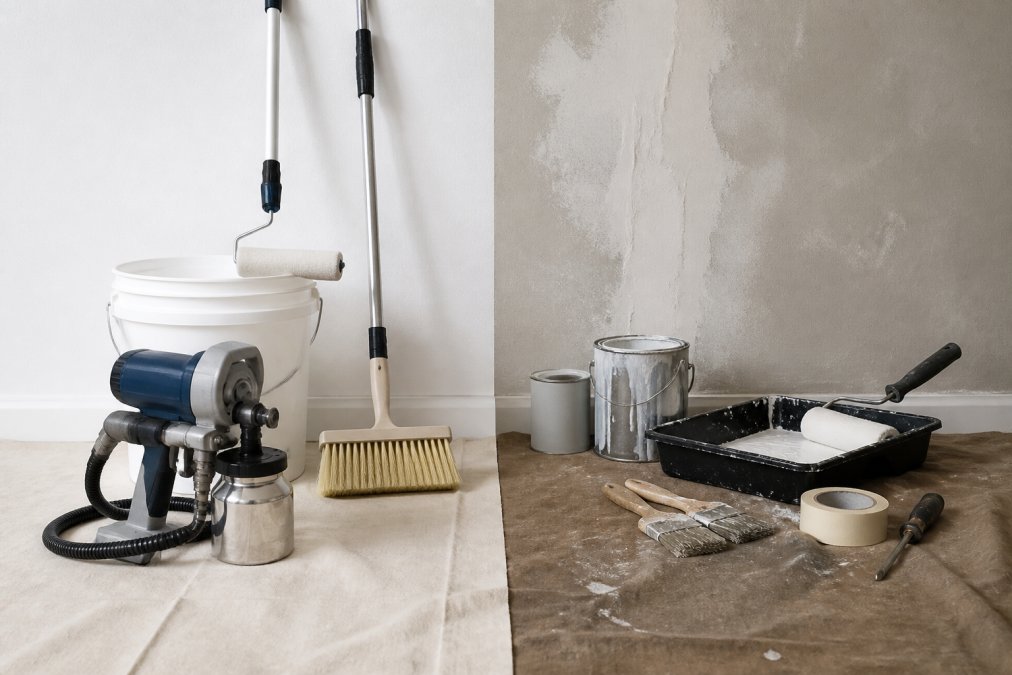
A complete painting supplies checklist for homeowners covers prep, application, and protection. Buy everything before you start, because a mid-project store run costs you a full day of dry time.
- Painter's tape (blue or delicate surface)
- Drop cloths (canvas, not plastic, for traction)
- Sanding blocks and fine-grit paper
- Patching compound and putty knife
- Caulk and caulking gun
- Primer (stain-blocking for patched areas)
- Angled brush for cut-in work
- Roller frames, covers, and extension pole
- Paint trays and liners
- Ladder rated for your ceiling height
- Stir sticks and a paint can opener
- Nitrile gloves and a respirator for low-VOC or oil-based products
Common DIY Painting Mistakes That Show Up in the Finish
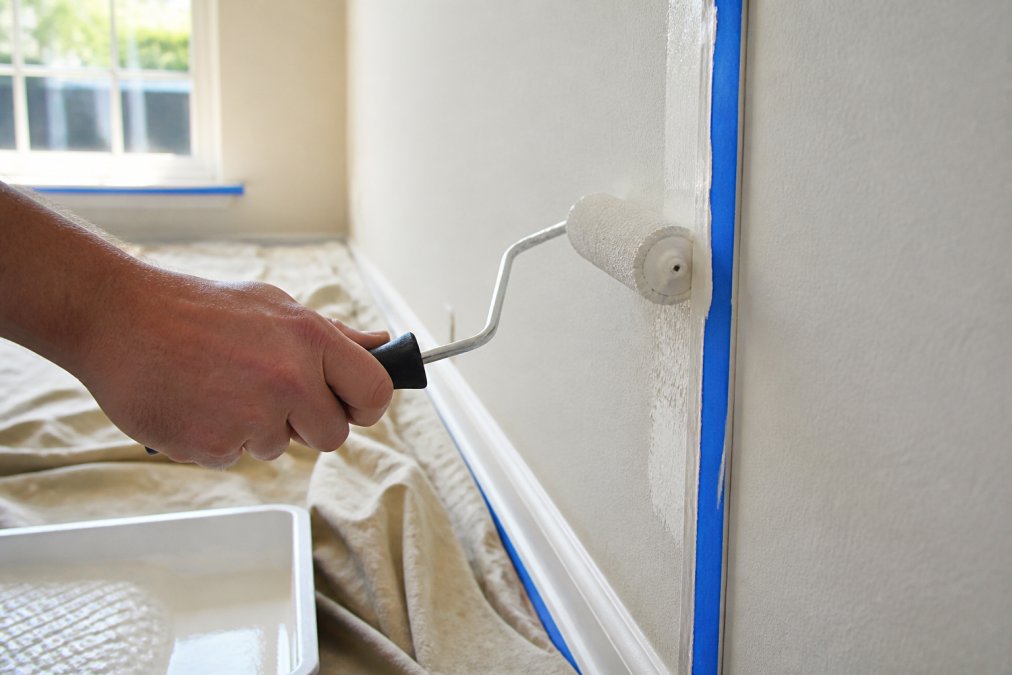
The most common DIY painting mistakes don't appear until weeks later: roller marks from uneven pressure, drip and splatter on trim, and paint adhesion failure from unprimed surfaces. Each one traces back to rushing a step.
Here's what actually goes wrong, and why:
- Cut-in lines that wobble. Freehand cutting around trim looks fine wet and terrible dry.
Where DIY Wins and Where Professional Painting Wins
Hire a pro when the project involves:
Resale Value, Warranty, and Waste: What Most Comparisons Skip
Resale Value and Time on Market
Warranty and Liability Coverage
Waste Disposal and VOC Management
Frequently Asked Questions
Is it better to paint myself or hire a professional painter?
It depends on the room, your timeline, and how picky you are about the finish. Small, low-traffic spaces like a closet or laundry room are reasonable DIY projects. Larger rooms, ceilings, trim work, and anything involving ladder safety or extensive surface preparation usually favor a professional crew. Hiring out also shifts warranty and liability coverage to the contractor, so if the finish fails or paint peels, you have recourse instead of redoing the work yourself.
How much does professional interior painting cost compared to DIY?
The cost of professional interior painting includes labor, material expenses, surface preparation, and cleanup, so it runs higher than a DIY project where you only buy paint and supplies. DIY saves money on labor but adds hours of prep, patching, sanding, and caulking. For an accurate figure on your home, request a free assessment from a licensed contractor rather than relying on generic online averages.
What is the 80/20 rule in painting?
The 80/20 rule in painting refers to how roughly 80 percent of a quality result comes from preparation and only 20 percent from the actual application. Surface preparation like sanding, patching, and primer application takes the most time but determines paint adhesion and finish quality. Skipping or rushing prep is one of the most common DIY painting mistakes, and it shows up later as peeling, flashing, and uneven sheen.
Do professional painters clean walls before painting?
Yes. A proper professional job starts with cleaning walls to remove dust, grease, and residue that prevent paint adhesion. Crews also patch holes, sand rough spots, caulk gaps around trim, and apply primer where needed. This prep stage is the hidden labor most DIY timelines underestimate, and it is the main reason professional finishes hold up longer and look more consistent across the whole room.
Is a DIY paint job worth it?
For a single accent wall or a small room where you have weekend time and basic tools, DIY can be worth it and save on labor costs. It stops being worth it when the project involves ceiling painting, tall walls, extensive trim work, or color consistency across a large open space. Add up your time, the painting supplies checklist, and the risk of redoing a flawed finish, then compare that against a professional quote.
The real challenge with professional painting vs DIY painting isn't the price tag, it's the hidden labor, warranty gap, and rework risk that never make it onto a comparison chart. Superior Painting and Remodeling LLC handles surface preparation, primer application, and finish work with licensed, BBB-accredited crews serving eight Middle Tennessee counties, backed by free project assessments and an A+ BBB rating. Call for your estimate and get a finish that holds up past the first year.